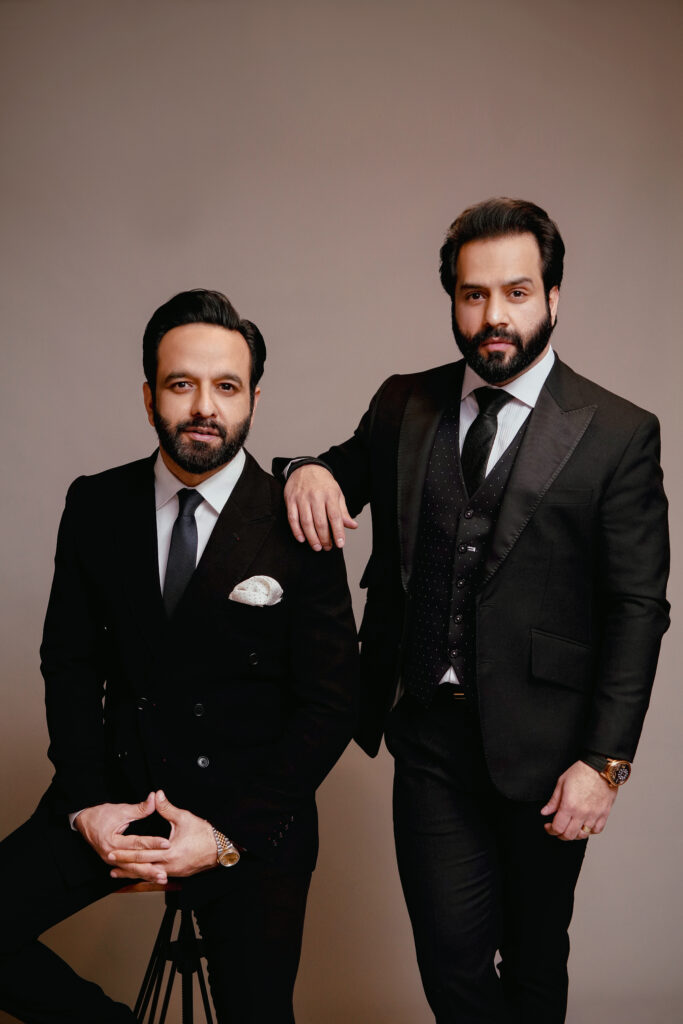

Makhfi — The Spirit of Zarlish by Mohsin Naveed Ranjha
For the 2025 chapter of Zarlish—Mohsin Naveed Ranjha’s much-loved festive unstitched line—the designer unveils Makhfi, a campaign that reads like poetry in motion: soft, introspective, and timeless. At its heart stands Sadaf Kanwal, the muse who becomes both vessel and voice for an era reborn.
Shot amid the marble symmetry and lush stillness of Shalimar Gardens, Makhfi draws upon the veiled verses of Princess Zeb-un-Nisa, daughter of Emperor Aurangzeb, whose pen name—Makhfi, meaning the hidden one—echoes through the campaign’s spirit.
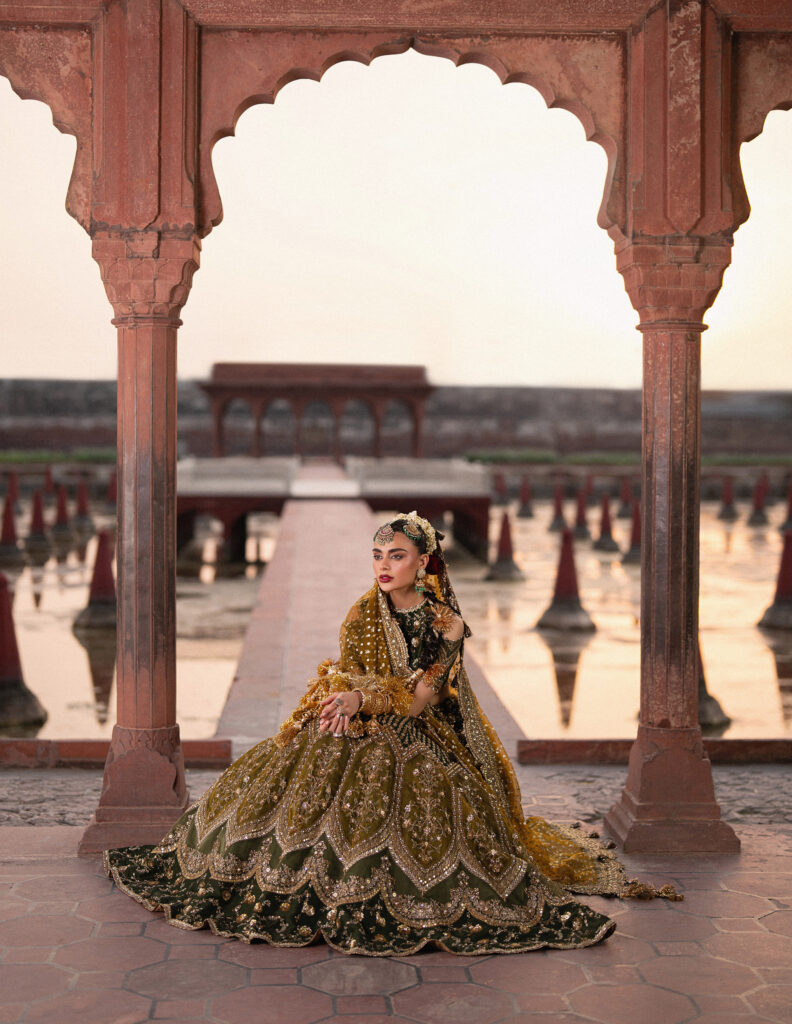
Makhfi is a conversation between visibility and silence. It revisits the life of a woman whose genius bloomed behind curtains of restraint—a princess and poetess who wrote under the weight of expectation and anonymity. Through Mohsin Naveed Ranjha’s lens, her story is retold not through words, but through fabric: a visual meditation on what it means to be seen and unseen, to conceal and to reveal.
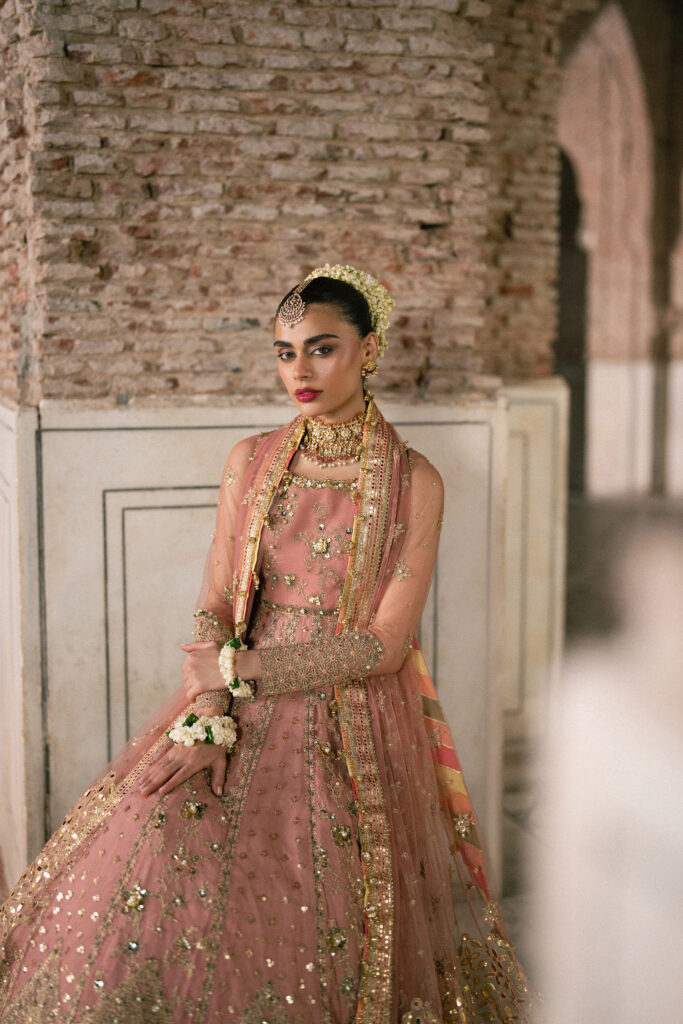
In every frame, Sadaf Kanwal embodies the paradox of Makhfi—a woman illuminated and yet shrouded, powerful in her stillness. The garments become metaphors: fluid yet structured, opulent yet austere, radiant yet muted. They pay homage to the dual nature of the feminine—her freedom and her boundaries, her voice and her silence.
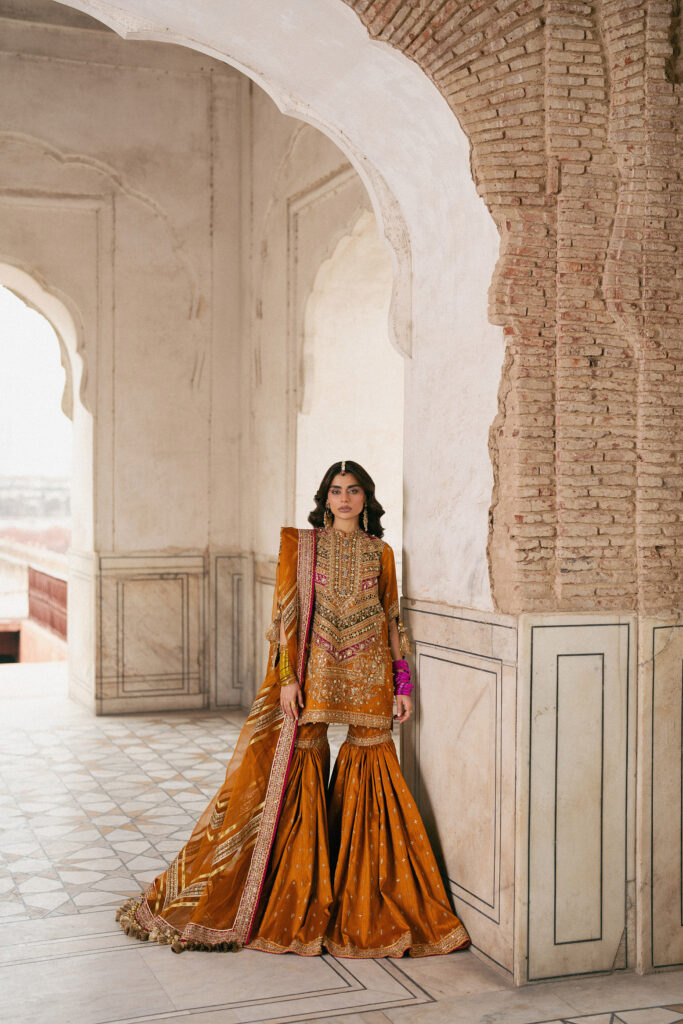
Set against the enduring grandeur of Shalimar Gardens, the campaign looks to Mughal architecture as both muse and metaphor. Each arch, lattice, and shadowed corridor whispers of stories preserved and secrets held—echoing the very essence of Makhfi.
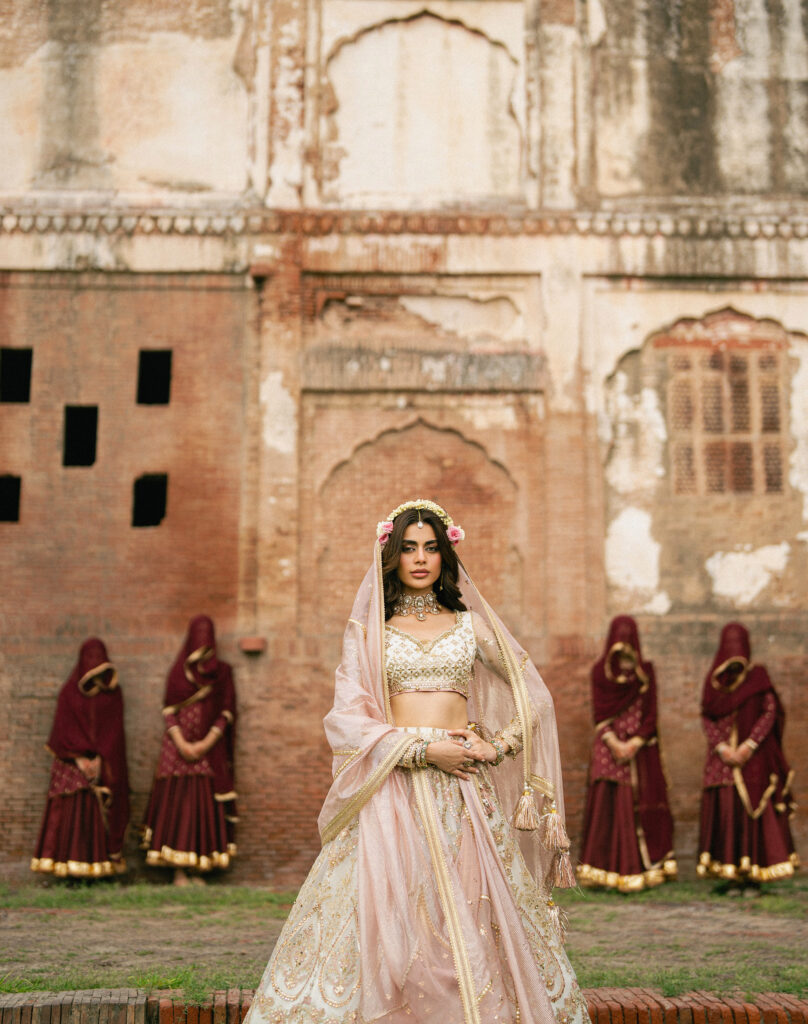
In Zarlish, that architectural language finds form in design. The embroidery—delicate resham, tilla, and zari—flows like carved marble jaalis, tracing symmetry and rhythm across textiles. The palette drifts from muted ivories and rose dusts to regal crimsons, each shade recalling the transition from concealment to revelation. Layered dupattas and fluid silhouettes mirror the architectural grace of domes and courtyards—spaces built to both shelter and celebrate light.
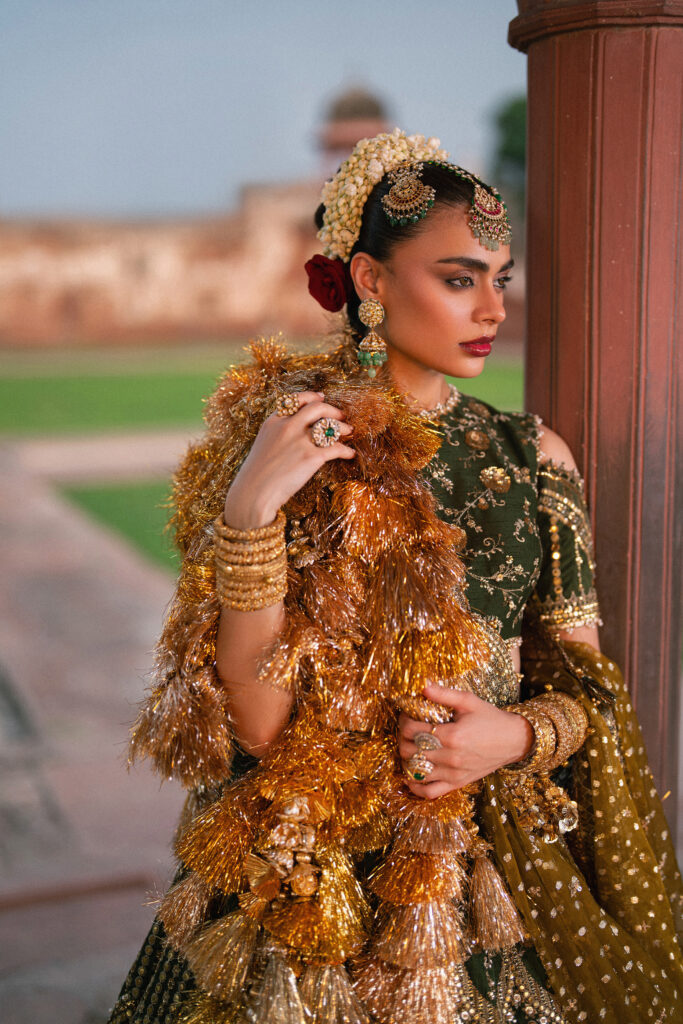
The collection, though rooted in heritage, feels distinctly present. It carries within it the restraint of Mughal precision and the warmth of modern femininity—where craft is not nostalgia, but continuity.
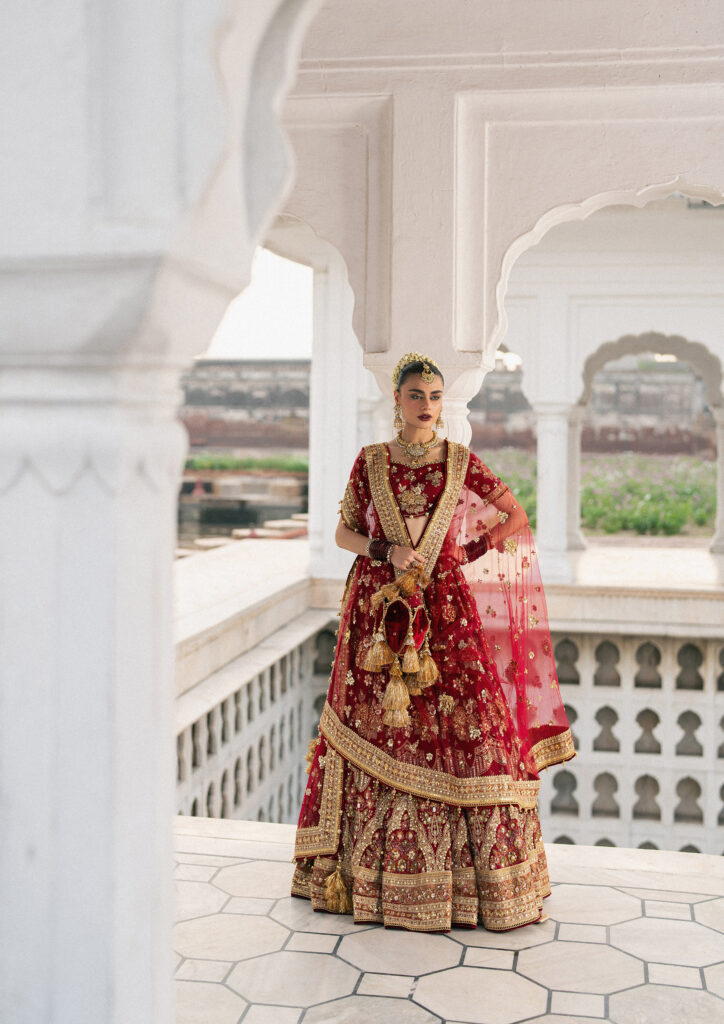
Zarlish marks something more—a gesture of inclusivity. Conceived as the most accessible collection in Ranjha’s oeuvre, it brings couture sensibilities to the unstitched form, proving that craftsmanship and affordability can coexist. It is fashion democratized, not diminished; luxury redefined through empathy rather than exclusivity.
In Makhfi, Ranjha crafts more than a campaign—he builds a bridge between time and self, between the seen and the hidden. Like the verses of Zeb-un-Nisa, Zarlish invites reflection: on womanhood, on heritage, and on the quiet endurance of beauty.